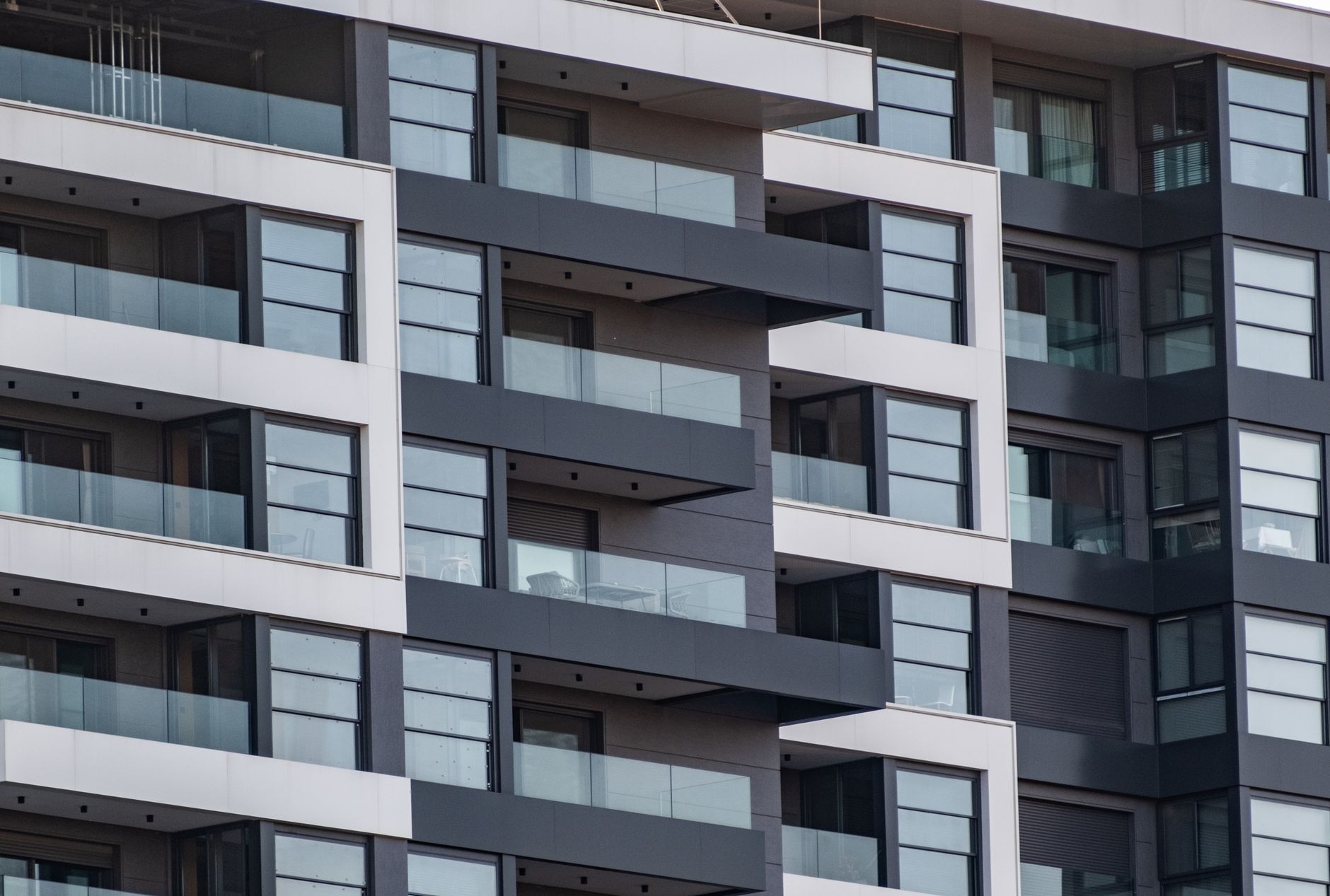
The Australian property market has entered a rare and welcome phase in July 2026: falling prices. According to data from the Australian Financial Review, national median dwelling values have declined by 2.1% over the past quarter, with Sydney and Melbourne leading the downturn at 3.4% and 2.8% respectively. For mortgage borrowers, particularly first home buyers and upsizers, this correction represents a genuine window of opportunity to enter the market or trade up at more affordable levels. But securing the right financing in this environment requires careful strategy, not just enthusiasm.
What Falling Prices Mean for Borrowers
The current price correction is not a crash, but a recalibration. CoreLogic data shows that the national median dwelling price now sits at $732,000, down from $748,000 in April 2026. The Reserve Bank of Australia held the cash rate steady at 4.10% in July, providing stability for variable-rate borrowers. For first home buyers, the combination of lower entry prices and stable borrowing costs creates a powerful incentive to act. A 10% deposit on a median-priced Sydney unit, for instance, now requires approximately $68,000 compared to $72,000 three months ago — a saving of $4,000 before even negotiating with a vendor.
Upsizers, typically homeowners with existing equity, face a different but equally compelling equation. As prices fall, the gap between the value of their current home and their desired upgrade narrows. In Melbourne, where the median house price dropped to $1.04 million in July, a homeowner selling a $850,000 property could now upgrade to a $1.04 million home with a smaller loan than they would have needed in April, when the median was $1.07 million. This dynamic is driving a surge in “trade-up” inquiries at mortgage brokerages across the country.
However, borrowers must be cautious. Falling prices can also reduce available equity for refinancing or for securing a new loan. Lenders are tightening their loan-to-value ratio (LVR) requirements, with many now demanding a minimum 20% deposit for standard loans and higher buffers for investment properties. The good news is that competition among lenders remains fierce. The average variable rate for owner-occupiers is 6.45%, down from 6.52% in January, according to Canstar. Fixed rates, meanwhile, have stabilised around 5.99% for three-year terms, offering certainty in an uncertain market.
For first home buyers, the federal government’s First Home Guarantee scheme remains active, allowing eligible buyers to purchase with as little as 5% deposit without paying lenders mortgage insurance (LMI). As of July 2026, the scheme has supported over 120,000 purchases since its inception, with take-up accelerating in the current market. Upsizers can leverage the Family Home Guarantee, which enables single parents with dependents to buy with a 2% deposit. These schemes, combined with falling prices, materially reduce the barrier to entry.
Financing Strategies for a Buyer's Market
Securing a mortgage in a falling market demands a proactive approach. Borrowers should not assume that lower prices automatically mean easier approval. Lenders are scrutinising income stability, employment history, and living expenses more rigorously than during the boom years. The first step for any buyer is to obtain pre-approval, which locks in an interest rate for 60 to 90 days and signals serious intent to sellers. Pre-approval also protects against rate rises while shopping, though borrowers should note that falling property values can affect the final loan amount if the valuation comes in lower than the purchase price.
A key strategy for first home buyers is to target properties that have already corrected significantly, rather than chasing further declines. In Sydney, suburbs such as Parramatta and Liverpool have seen price drops of over 5% since April, offering entry points below $600,000 for apartments. For upsizers, the focus should be on suburbs where the price gap between lower and higher quartiles has narrowed. In Brisbane, for example, the difference between median house prices in the top 25% and bottom 25% of suburbs has shrunk from $420,000 to $380,000, making upgrades more affordable.
Another critical consideration is the choice between fixed and variable rates. With the RBA signalling potential rate cuts in late 2026, variable rates may become more attractive. However, fixed rates offer stability for borrowers who need to budget precisely. A split loan — part fixed, part variable — can provide the best of both worlds. For example, a borrower with a $600,000 loan could fix $300,000 at 5.99% for three years and leave $300,000 on a variable rate at 6.45%, allowing them to benefit from any future cuts while hedging against increases. This approach is particularly suited to upsizers who may have higher loan amounts and need predictability.
Arrivau, as a full-service mortgage brokerage, can help borrowers navigate these complexities by comparing rates across 40+ lenders and identifying niche products such as low-doc loans for self-employed buyers or offset accounts for those with savings. For first home buyers, Arrivau’s team can assess eligibility for government schemes and negotiate with lenders to reduce LMI costs. The key is to act decisively but not recklessly — falling prices won’t last forever, and the window of opportunity is likely to close as buyer demand picks up.
Risks and Opportunities for Upsizers
Upsizers face a unique set of risks in a falling market. The primary danger is that the value of their current home declines faster than the property they want to buy, eroding their equity. To mitigate this, upsizers should sell first and buy later, or secure a bridging loan that covers the purchase before the sale completes. Bridging loans are short-term, high-interest products, but they allow upsizers to lock in a purchase price without being forced to sell in a hurry. As of July 2026, major banks offer bridging loans at rates between 7.2% and 8.5%, with terms of up to 12 months.
Another risk is over-leveraging. With prices falling, some upsizers may be tempted to borrow more to buy a larger home, assuming that values will rebound quickly. Historical data from the 2017-2019 correction shows that recovery can take 18 to 24 months in major cities. Borrowers should stress-test their finances against a scenario where rates rise by another 0.5% and property values fall a further 5%. A responsible lender will already do this, but borrowers should independently ensure their mortgage repayments do not exceed 30% of their gross income.
On the opportunity side, upsizers can take advantage of vendor desperation. The AFR reports that auction clearance rates in Sydney dropped to 58% in June, the lowest since February 2023. This means more properties are passing in, giving buyers negotiating power. Upsizers with pre-approval and a sold property can make unconditional offers, often securing discounts of 5% to 10% below the asking price. For a $1.5 million home in Sydney’s inner west, that could mean savings of $75,000 to $150,000 — enough to cover stamp duty and renovation costs.
For more detailed guidance on structuring a loan for an upgrade, readers can explore Arrivau’s /mortgage-guides/ section, which covers topics like “How to Use Equity for Your Next Home” and “Bridging Loans Explained.” Additionally, understanding current /rates/ is crucial for timing a purchase. The market is favourable for those who plan, but unforgiving for those who rush.
FAQ
Q: Is now a good time for first home buyers to enter the market?
Yes, for many first home buyers the current conditions are the most favourable since early 2023. Falling prices reduce deposit requirements, and government schemes like the First Home Guarantee allow purchases with as little as 5% deposit. However, buyers should ensure they have stable income and can afford repayments at current rates, which remain elevated. Pre-approval is strongly recommended.
Q: How can upsizers protect themselves if prices keep falling?
Upsizers should consider selling their current home before buying to lock in equity. Alternatively, a bridging loan can cover the gap. They should also negotiate hard on price, targeting properties that have already corrected significantly. Stress-testing finances against a further 5% price drop and a 0.5% rate rise is prudent.
Q: What loan type is best in a falling market?
A split loan offering part fixed and part variable rates is often ideal. It provides stability for a portion of the debt while allowing flexibility to benefit from potential rate cuts. First home buyers may prefer a variable rate with an offset account to reduce interest, while upsizers with larger loans might prioritise fixed-rate certainty.
Sources and further reading
- Australian Financial Review, “A good market: First Home Buyers and upsizers win as prices fall,” July 10, 2026.
- CoreLogic, “National Home Value Index,” July 2026.
- Canstar, “Home Loan Rate Trends,” July 2026.
- Reserve Bank of Australia, “Monetary Policy Decision,” July 7, 2026.
- Arrivau, /rates/ — current home loan rate comparisons.
- Arrivau, /mortgage-guides/ — guides on first home buyer schemes and upsizing strategies.
Want the numbers run for your situation?
Get a free, no-obligation assessment from Arrivau's licensed team — loan, property or migration.
Start a free assessment →