Introduction
Refinancing a reverse mortgage in 2026 is a transaction shaped by regulatory guardrails, a stabilising cash rate, and heightened scrutiny on equity-release products. For Australian retirees who entered a reverse mortgage between 2018 and 2022—when the Reserve Bank of Australia (RBA) cash rate sat below 0.25%—the current environment offers both repricing opportunities and fresh lender competition. The Australian Securities and Investments Commission (ASIC) continues to enforce the no-negative-equity guarantee under the National Consumer Credit Protection Act 2009, making a refinance decision structurally different from conventional mortgage switching. As of March 2026, the RBA cash rate is 3.60%, almost six times the pandemic floor, which has reweighted the cost-benefit analysis of pulling equity from a primary residence.
This article catalogues the reverse mortgage refinance landscape available to Australian borrowers in 2026. It does so by surveying the regulatory baseline, repayment mechanics, lender-tier differentiation, interest-cost averages, and the legal safeguards that prevent debt from exceeding home value. Every rate, cap, and loan-to-value ratio (LVR) cited draws on data from the RBA, the Australian Prudential Regulation Authority (APRA), ASIC, or formal product disclosure statements. The discussion is analytical, not advisory.
The 2026 Regulatory Backbone for Reverse Mortgages
The prudential and conduct framework for reverse mortgages in 2026 is unchanged in its core protections but hardened in practice. ASIC’s Regulatory Guide 220 and the ASIC Credit (Reverse Mortgage) Instrument 2024/006 continue to mandate that lenders guarantee the borrower will never owe more than the sale value of the property. This statutory no-negative-equity guarantee is not optional; it is embedded in every regulated reverse mortgage contract. APRA’s quarterly ADI property exposure statistics show that the aggregate stock of reverse mortgages held by authorised deposit-taking institutions (ADIs) stood at $4.72 billion in December 2025, up from $4.13 billion in June 2023. Non-ADI lenders—such as Heartland Seniors Finance and Household Capital—carry a further estimated $2.1 billion in outstanding balances, according to industry data referenced in ASIC Report 785.
From a refinance perspective, the regulatory emphasis on responsible lending means that any new reverse mortgage application—including a switch of an existing facility—must pass a fresh assessment under the responsible lending obligations in Chapter 3 of the National Consumer Credit Protection Act 2009. The lender must verify that the borrower can meet ongoing obligations without substantial hardship, a test that often involves projected healthcare costs, rates, insurance, and maintenance. ASIC’s MoneySmart website (moneysmart.gov.au/reverse-mortgages) specifies that a reverse mortgage should be treated as a loan of last resort, and the same scrutiny is applied when a borrower seeks to refinance. The result is a refinance process that is slower—averaging 45 to 60 days in 2025—but also more protective.
The Australian Treasury’s Retirement Income Review released a final report in late 2025 that flagged the interaction between the Age Pension means test and reverse mortgage drawdowns. If a refinance unlocks a lump sum that sits beyond the liquid-asset test thresholds, it can temporarily reduce pension entitlements. This interaction is not regulated by the credit act but by the Social Security Act 1991, administered by Services Australia. Borrowers and their advisers in 2026 therefore must run parallel calculations: one for credit eligibility, another for Centrelink impact.
Mechanics of a Reverse Mortgage Refinance: Equity Release and Repayment Structures

A reverse mortgage refinance replaces an existing equity-release loan with a new facility—typically with a different lender, updated interest rate, or higher drawdown limit. The process restructures the compounding debt on the property while preserving the no-negative-equity guarantee. Because Australian reverse mortgages are almost exclusively variable-rate products with optional repayments, refinance activity is driven primarily by interest cost differentials and the desire to adjust credit limits. In 2026, the prevalent structure remains a line-of-credit drawdown facility that accrues interest monthly on the outstanding balance, compounded into the loan balance, with no compulsory principal repayment until the property is sold or the last borrower vacates.
Loan-to-value ratios on refinance are capped by age. A 70-year-old borrower at origination typically obtains a maximum LVR between 20% and 30%, while an 85-year-old may reach 40% to 45%. These bands are dictated by actuarial tables and APRA’s capital adequacy standards for ADIs under APS 112, which require higher risk-weighting for equity-release products. Non-ADI lenders, not bound by APRA’s capital rules, sometimes offer LVRs up to 50% for borrowers aged 90 and above, but at materially higher interest rates. Heartland Seniors Finance’s 2026 product suite, for example, caps LVR at 45% for an 80-year-old in a metropolitan postcode, as verified by their public product guide dated 3 February 2026.
Refinancing costs include a standard application fee averaging $495 to $695, a valuation fee of $400 to $600, and legal or settlement fees of approximately $750 to $1,100. Exit fees on the old reverse mortgage are prohibited for contracts entered after 1 July 2012 under the Corporations Amendment (Reverse Mortgage Exit Fees) Regulation 2012, but some pre-2012 contracts may still carry a discharge fee; legal confirmation is necessary. Borrowers should also account for break costs if the original lender structured a fixed-rate component—rare in the Australian reverse mortgage sector, but present in a few niche products offered by mutual ADIs.
Comparing 2026 Lender Tiers: ADIs, Non-Banks, and Niche Providers
The Australian reverse mortgage market in 2026 segments into three tiers. The first tier comprises major ADIs—Commonwealth Bank’s Equity Unlock for Seniors and Westpac’s Senior Access Line—which report their portfolios to APRA quarterly. Their headline variable rates as of March 2026 sit between 8.20% and 8.60% p.a. (comparison rate between 8.40% and 8.80%). The second tier is specialist non-ADI lenders, including Heartland Seniors Finance (Heartland Group Holdings, ASX listed) and Household Capital, whose rates range from 8.45% to 9.15% p.a., often tiered by LVR and property location. The third tier consists of mutual banks and credit unions—such as Police Bank and Qudos Bank—that offer reverse mortgages exclusively to members and typically price 10 to 25 basis points below the major banks.
Rate dispersion across tiers is meaningful for refinance decisions. A 0.50 percentage point difference on a $200,000 reverse mortgage loan compounded monthly over 10 years results in an approximate $17,000 variance in the end-of-term balance, assuming no voluntary repayments and a 4.0% average inflation-adjusted property growth rate. These numbers are calculated using the standard actuarial methodology outlined in APRA’s LRS 112.0, which is used for capital provisioning.
Drawdown flexibility differs by lender. Major ADIs predominantly offer a lump-sum or regular-income draw structure with a minimum initial draw of $20,000. Non-ADI lenders, particularly Household Capital, promote a hybrid approach that allows a cash reserve facility alongside scheduled advances, giving borrowers access to future equity growth without requiring a full refinance. This feature may reduce the impetus to refinance again later, but it comes at a cost—Household Capital’s cash reserve facility carries a 0.25% p.a. higher rate than its standard drawdown loan, according to its 2026 terms booklet.
Geographic constraints remain a filter. Heartland Seniors Finance restricts metropolitan lending to properties within 30 kilometres of a major CBD and regional lending to towns with populations exceeding 15,000. Westpac’s Senior Access Line requires a minimum property value of $400,000 in metropolitan areas and $300,000 in regional zones. These thresholds act as a defacto eligibility test for refinance applicants, with the Australian Bureau of Statistics March 2026 median house price data giving a Sydney median of $1.47 million and a regional NSW median of $745,000, meaning many regional properties fall inside lender limits, but not all.
Interest Rate Environment and Cost Analysis
The RBA cash rate trajectory heavily influences reverse mortgage pricing. As of the March 2026 Board meeting, the cash rate target stands at 3.60%, unchanged for five consecutive meetings. Market pricing implies one further 25-basis-point cut in the September quarter, which would take the cash rate to 3.35%. Reverse mortgage lenders typically price their products at a margin between 4.60% and 5.50% above the 30-day bank bill swap rate (BBSW), which sat at 3.45% in early March 2026. This places the expected average headline reverse mortgage rate at 8.20% to 8.85% p.a., a band that has been stable since November 2025.
A borrower refinancing a $180,000 reverse mortgage in March 2026 can expect daily compounding interest. At a headline rate of 8.50% p.a., the effective annualised rate is approximately 8.87%, which means the debt doubles in about 8.1 years if no repayments are made. By contrast, in 2021, when headline rates were 4.25% p.a., the doubling period extended to roughly 16.9 years. This contraction in the doubling timeline is the single most salient metric for 2026 refinance candidates, and it is a direct product of the RBA’S rapid 425-basis-point tightening cycle between May 2022 and November 2023, as detailed in the RBA’s Statement on Monetary Policy February 2026.
Transaction cost recovery must be modelled. Application, valuation, and legal fees totaling $1,850 to $2,300 represent 1.0% to 1.3% of a $180,000 loan. If the interest rate differential between the old and new facility is 0.35 percentage points, the annual interest saving is $630 on the initial balance, requiring roughly three years to recover costs. For a differential of 0.80 percentage points, which is possible when switching from a 2022-vintage major-bank loan to a 2026 mutual ADI loan, the annual saving rises to $1,440 and the payback period shrinks to 16 to 19 months. These calculations presume no change in the loan balance; any additional drawdown immediately alters the cost-recovery equation.
The official cash rate path forecast published by the RBA in its February 2026 Monetary Policy Statement indicates a median projection of 3.20% by December 2026. If realised, reverse mortgage rates may ease by 40 to 60 basis points over the same window, making a tactical delay of six to nine months a rational choice for borrowers who can tolerate current pricing. However, lenders front-run rate cuts imperfectly, and the BBSW market already prices two cuts, meaning some downward rate repricing may already be embedded in the 8.20%–8.85% band.
Eligibility, Protections, and the Credit Assessment Process
All reverse mortgage refinance applications in 2026 must pass a point-in-time credit assessment governed by ASIC’s responsible lending guidelines. The lender must obtain and verify information about the borrower’s financial situation—income from the Age Pension, superannuation drawdowns, investment earnings, and any part-time employment. Ongoing expenses are substantiated using the Household Expenditure Measure benchmark or actual bank statements for the previous 90 days. ASIC Regulatory Guide 209 explicitly requires lenders to consider whether the borrower can afford the loan without substantial hardship, and a refinance is treated no differently from a new origination.
The no-negative-equity guarantee, codified in the National Consumer Credit Protection Regulations 2010 (Schedule 1, Part 3, Division 2A), means that the debt can never exceed the property’s net sale proceeds. If the sale price is insufficient to cover the outstanding loan, the lender absorbs the loss. APRA’s ADI capital framework assigns risk-weights of 50% to 100% for reverse mortgages, depending on LVR, incentivising lenders to keep exposure well below full property value. This regulatory backstop carries real bite: in 2024, ASIC imposed a $5.2 million civil penalty on an ADI for failing to honour the guarantee in three cases involving pre-2012 contracts, as reported in ASIC Media Release 24-236MR.
Eligibility criteria in 2026 are uniform in core requirements but vary at the margin. All lenders require a minimum borrower age of 60, owner-occupier status, and a property title free of significant encumbrances. Most require the property to be the borrower’s principal place of residence. Additional conditions observed across term sheets include: no more than one prior reverse mortgage on the same title; property must be in a marketable condition with no Council-issued building orders; and a current council rates certificate showing no more than $2,000 in overdue rates. Banks applying the APRA Prudential Standard APS 112 also run a stress test on the borrower’s capacity to fund council rates, insurance, and essential maintenance for a 25-year horizon, even if the actuarial expectation is shorter.
For refinance applicants who have an existing reverse mortgage, the new lender must contact the existing lender to confirm the payout figure and ensure the title is discharged cleanly. This inter-lender verification adds approximately 10 business days to the settlement cycle. Borrowers should instruct a solicitor to handle the payout authority and registration of the new mortgage, a cost that must be funded separately from the loan proceeds. Conveyancing fees for reverse mortgage refinance typically range between $700 and $950 plus GST.
Strategic Considerations and Risk Assessment
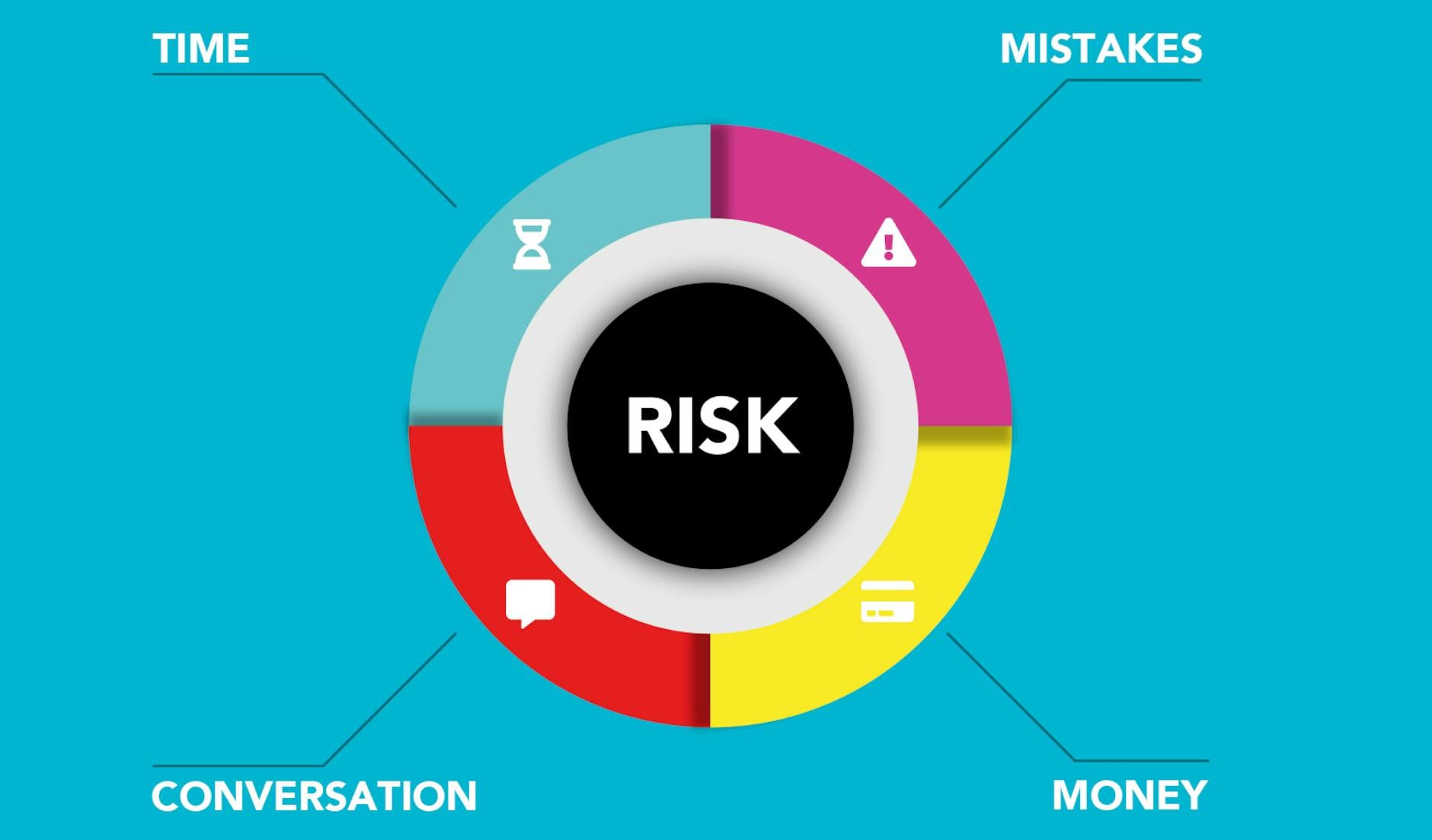
Refinancing a reverse mortgage in 2026 carries implications that extend beyond the rate sheet. The most material risk is that a refinance resets the loan’s term and interest-compounding trajectory. If a borrower has held a reverse mortgage for eight years and accumulated $120,000 in interest on a $150,000 initial draw, refinancing at a lower rate will slow future interest accrual but will not erase the existing capitalised interest. The new lender simply refinances the entire payout figure of approximately $270,000. The no-negative-equity guarantee remains in force, but the lender’s security value is now measured against a property that may have appreciated at a slower pace than the debt has compounded. If the property is worth $700,000, the $270,000 debt represents a 38.6% LVR—still within prudent bounds for a 78-year-old borrower—but the margin of safety has narrowed.
A second strategic consideration involves the Age Pension means test. Under the Social Security Act 1991, a reverse mortgage drawdown is not assessed as income, but if the funds are retained in a bank account beyond the allowable gifting and asset thresholds, they may reduce the pension entitlement. The liquid-asset test waiting period may also be triggered if the borrower receives a lump sum above $5,500 (single) or $11,000 (couple). Services Australia’s December 2025 policy manual update clarified that a refinance that simply replaces one debt with another does not create a new asset; however, if the refinance increases the loan amount—known as a “top-up”—the additional proceeds are treated as liquid assets subject to the means test. Financial advisers with a reverse mortgage specialisation generally recommend structuring the refinance with a smaller initial draw and using a cash reserve facility to manage the Age Pension taper.
Property market trajectory matters because it determines the long-run LVR path. The RBA’s February 2026 Statement on Monetary Policy noted that national residential property prices were 12% above their March 2020 level in real terms, but had declined 4.2% from their January 2025 peak. APRA’s latest residential property exposure data shows authorised deposit-taking institutions holding $2.23 trillion in housing loans, with impaired reverse mortgage loans at 0.27% of the equity-release portfolio. While low, this rate is up from 0.12% in 2022, a trend that warrants monitoring. A refinance applicant in a softening market may find that the new lender imposes a more conservative LVR cap, potentially requiring a smaller loan amount than anticipated.
Informed consent remains the overriding regulatory expectation. ASIC’s MoneySmart reverse mortgage page (moneysmart.gov.au/reverse-mortgages) states that any reverse mortgage should be considered only after exploring all other options, including downsizing, using the Home Equity Access Scheme (formerly the Pension Loans Scheme) administered by Services Australia, or accessing superannuation lump sums through a transition-to-retirement strategy. The Department of Social Services’ 2025 report on the Home Equity Access Scheme notes that 12,450 participants were receiving payments as of June 2025, with the average fortnightly payment at $265 and the average loan balance at $32,000. The scheme’s effective interest rate of 3.95% p.a. (compounded fortnightly) remains significantly cheaper than any private reverse mortgage, though it is limited to 150% of the maximum Age Pension rate. A refinance applicant with a private reverse mortgage may wish to consider whether repaying a portion of the debt using the government scheme and taking a smaller private top-up would produce a better long-term outcome.
Conclusion
The reverse mortgage refinance market for Australian retirees in 2026 presents a plain-language risk calculus: lower rates than 2023’s peak, strong borrower protections, and a diversified lender panel, offset by compressed equity buffers and a nuanced interaction with the Age Pension. The RBA’s cash rate at 3.60% anchors headline reverse mortgage rates in the 8.20%–8.85% range, with mutual ADIs offering the most competitive pricing for borrowers who meet membership criteria. The statutory no-negative-equity guarantee and ASIC’s responsible lending overlay ensure that a refinance cannot expose a borrower to debt exceeding the home value. The Home Equity Access Scheme remains a low-cost alternative for modest cashflow supplementation, and its expansion in 2025 adds a legitimate option for those who might otherwise refinance a higher-rate private facility.
Borrowers who approach a reverse mortgage refinance in 2026 without independent legal and financial advice risk mispricing the interplay between interest compounding, Centrelink entitlements, and property market movement. The array of lender options—from major ADIs to specialist non-ADI providers—generates genuine choice, but the transaction costs, timeframes, and long-term debt dynamics reward careful structured comparisons.
Information only, not personal financial advice. Consult a licensed mortgage broker and a financial adviser before making any decision.
Want the numbers run for your situation?
Get a free, no-obligation assessment from Arrivau's licensed team — loan, property or migration.
Start a free assessment →