
Negative Gearing in 2026: How Property Investors Claim Tax Deductions
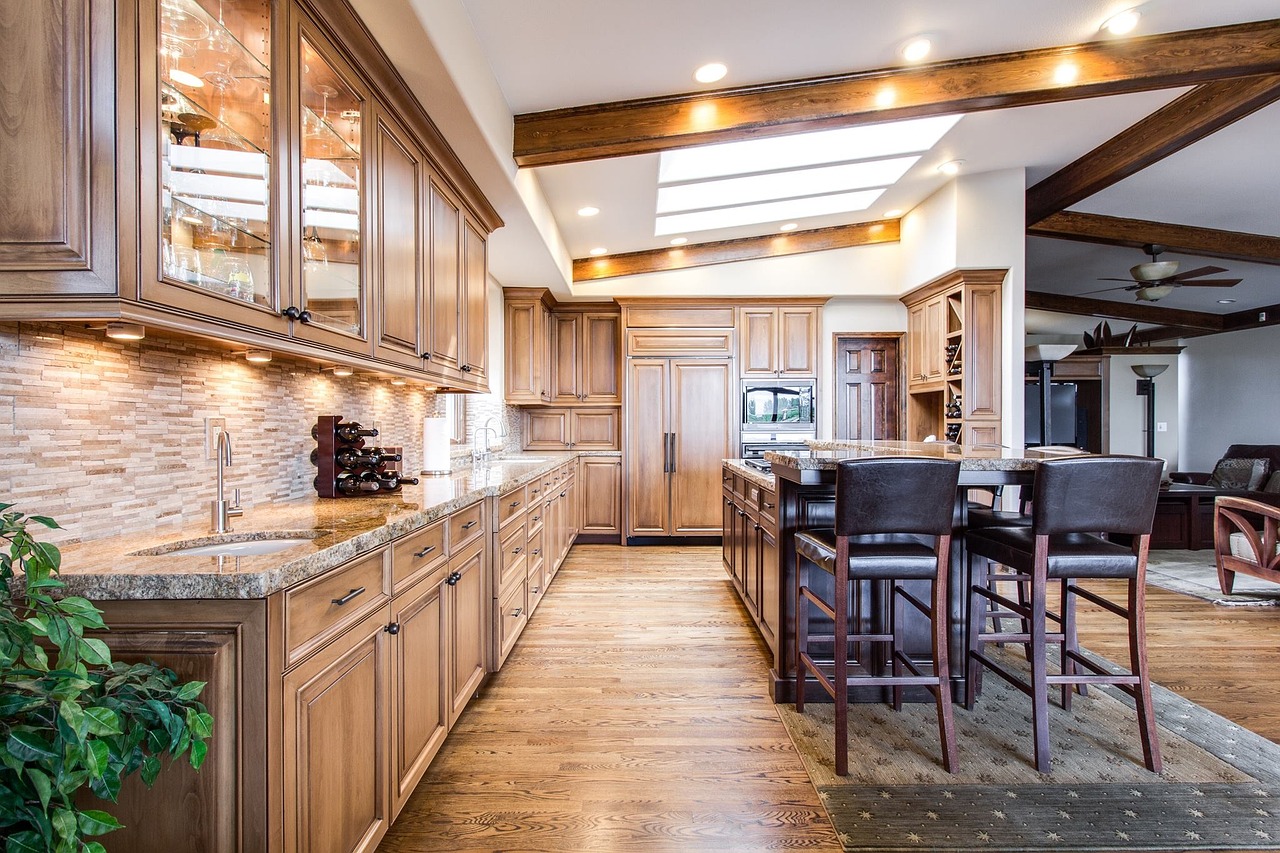
What Negative Gearing Means for Australian Property Investors in 2026
Negative gearing is a tax strategy where the cost of owning an investment property—specifically the interest on your loan plus holding expenses—exceeds the rental income it generates. The resulting net rental loss is deducted from your total taxable income, reducing your overall tax liability.
In the 2026 financial year, with the RBA cash rate at 4.35% and average investor variable rates sitting between 7.18% and 7.23% (per big four product pages, April 2026), negative gearing is a significant cash flow consideration for leveraged property investors. A $600,000 investment loan at 7.20% incurs $43,200 in annual interest alone—easily outstripping $28,000–$32,000 of rental income on a typical metropolitan unit.
How the Numbers Work: A 2026 Example
Assume a Sydney-based investor holding a two-bedroom unit in Parramatta in FY2025-26. The rental income, based on 48 weeks occupied at $650 per week, comes to $31,200. From this, deductible expenses are subtracted. Mortgage interest on a $600,000 interest-only loan at 7.20% amounts to $43,200. Council rates add $1,600, while strata levies at $950 per quarter total $3,800. Water rates are $900, and combined landlord and building insurance costs $1,500. Property management fees, calculated at 7.7% of the rental income, equal $2,402. Repairs and maintenance come to $2,200, and a depreciation schedule covering Division 40 and Division 43 claims adds $8,500. The total deductions reach $64,102, resulting in a net rental loss—the negatively geared position—of $32,902.
If this investor's marginal tax rate is 37% (taxable income $135,000–$190,000 in 2025–26), the net rental loss of $32,902 reduces their taxable income to $102,098—lowering their tax bill by approximately $12,174 for the year. The effective out-of-pocket cost after tax is $20,728 ($32,902 − $12,174), or roughly $399 per week.
What Counts as a Deductible Expense
The ATO's rental property guide (NAT 1729, updated June 2025) lists the following categories:
Immediately Deductible (Same Year)
Loan interest is deductible on the investment loan portion, but not principal repayments. If part of the loan was used for personal purposes, only the investment share is deductible. Council rates are based on the annual notice from your local council. Strata or body corporate fees cover administrative fund and sinking fund levies, though special levies for capital works are treated differently. Water and sewerage charges include usage and service fees where the landlord pays, noting that the tenant pays usage in most states. Insurance covers landlord, building, and public liability for the rental property, with contents insurance applicable if you provide furnished premises. Property management fees encompass letting fees, monthly management fees, advertising for tenants, lease renewal fees, and tribunal representation. Repairs and maintenance involve fixing damage, replacing broken fixtures, or repainting after a tenant vacates; the work must be a repair, not an improvement—replacing a broken hot water system is a repair, while upgrading from electric to gas instantaneous is an improvement classified as capital works. Pest control includes ongoing pest management and termite inspections. Gardening and lawn mowing are deductible if you, as landlord, provide this service to the tenant. Legal fees for lease preparation, tenancy disputes, or eviction proceedings are claimable, but conveyancing costs when you bought the property are a capital cost. Travel expenses are only deductible if your main residence is genuinely remote from the property and you travel for maintenance or inspection; the ATO has tightened this, and casual drive-by inspections don't count. Stationery, phone, and internet costs are claimable in the proportion attributable to managing the investment property.
Deductible Over Time (Depreciation)
Division 40 covers plant and equipment, using either the diminishing value or prime cost method. Typical rates include 10–20% for carpets, 7–13% for blinds, 10–20% for appliances, and 10–20% for HVAC per year. Division 43 covers capital works, deducted at 2.5% straight line over 40 years, applying to the building structure, fixed items like walls, roof, and fixed plumbing, and structural improvements.
A quantity surveyor's tax depreciation schedule (cost $400–$750, itself deductible) is essential. For a property built after 1987, Division 43 alone on a $450,000 construction cost yields $11,250/year in depreciation deductions over 40 years. The ATO requires a qualified professional to prepare the schedule—self-estimated depreciation figures are not accepted.
What You Cannot Claim
The ATO explicitly excludes:
- Acquisition costs: Stamp duty, conveyancing fees, mortgage registration. These form part of your cost base for CGT calculations when you sell, not annual deductions.
- Borrowing costs over $100: Title search, valuation fees, mortgage application fees, LMI. These are amortised over 5 years or the loan term (whichever is shorter). Loan establishment fees under $100 can be claimed immediately.
- Principal repayments: Only the interest component of your loan is deductible.
- Expenses for personal use periods: If you occupy the property for part of the year, expenses must be apportioned.
- Capital improvements: Renovations, extensions, structural upgrades. These are capital works deductions (Division 43), not immediate write-offs. Installing a new kitchen in an existing rental is a capital work; replacing a broken cabinet door is a repair.
- Travel to inspect when your main residence is nearby: The ATO's 2024 compliance update specifically flags investors who claim travel deductions for properties within 30 km of their home.
Capital Gains Tax and Negative Gearing: The Longer View
Negative gearing reduces your tax now, but CGT on the eventual sale can claw back a portion. When you sell an investment property acquired after 20 September 1985:
- CGT applies to the gain (sale price minus cost base).
- Cost base includes purchase price + stamp duty + conveyancing + capital improvements (not annual repairs) + all holding costs if the property was always income-producing.
- The 50% CGT discount applies if you've held the property for at least 12 months as an individual or through a trust (not available to companies).
- Depreciation deductions claimed over the years reduce the cost base for CGT purposes—meaning the CGT gain is larger when you sell. A Division 43 deduction claimed over 10 years = ~$112,500 that would otherwise not be part of a CGT event. This is a key planning consideration.
Example: You bought a $700,000 investment property in 2020, claimed $90,000 in Division 43 depreciation by 2026, and now sell for $850,000. Your cost base is approximately $780,000 ($700,000 + $50,000 stamp duty and conveyancing + $30,000 capital improvements − $90,000 depreciation add-back + other holding costs). CGT calculation: $850,000 − ~$780,000 = ~$70,000 gain, discounted 50% = ~$35,000 added to your taxable income in the year of sale.
Negative Gearing and the 2026–27 Tax Landscape
Several policy developments are worth monitoring:
- Stage 3 tax cuts (effective 1 July 2024) have reduced marginal rates for the $45,000–$200,000 bracket from 32.5% to 30%, slightly reducing the tax benefit of negative gearing for investors in this income band.
- Labor's housing policy (as of the 2025 Federal Election) did not introduce changes to negative gearing, but the issue remains a live policy debate. Any future reform would likely be grandfathered—existing properties would retain existing treatment.
- ATO compliance activity: The ATO's rental property data-matching program now cross-references third-party data from property managers, Airbnb, state revenue offices, and banks. In 2024–25, the ATO reported adjusting over $1.2 billion in rental deductions across approximately 2.3 million rental property owners.
Five Common Negative Gearing Mistakes Investors Make
- Claiming travel when the property is down the road. If your main residence is 15 minutes from your investment property, the ATO won't accept weekly "inspection" trips as deductible. Document genuine maintenance visits with receipts and photos.
- Treating improvements as repairs. Replacing the entire bathroom is an improvement (Division 43). Replacing a cracked basin is a repair (immediate deduction). The ATO's test: does the work restore function, or enhance it?
- Not apportioning the loan correctly. If you refinanced your $500,000 investment loan to $600,000 and used the extra $100,000 for a new car, only the $500,000 portion is deductible. Mixed-purpose loans require careful record-keeping.
- Forgetting to update the depreciation schedule after renovations. If you upgrade floor coverings, the old carpet's written-down value should be scrapped and the new installation included in the updated schedule.
- Overlooking the CGT impact of depreciation claims. The depreciation you claim now increases your CGT liability later. It's not free money—it's a timing benefit. Run the long-term numbers before maximising depreciation claims aggressively.
How Negative Gearing Fits Into an Investment Strategy
Negative gearing is a tax tool, not an investment thesis. A property that loses money, even after tax, is still a losing investment. The strategy works when:
- Capital growth expectations exceed the annual cash loss. A property losing $400/week but appreciating $60,000/year represents a net gain—but appreciation is uncertain, while losses are certain.
- You have the cash flow to sustain the loss. A $400/week shortfall requires $20,800/year of free cash flow. Over a 5-year hold period, that's $104,000.
- You're in a high marginal tax bracket. The tax benefit scales with your tax rate. At 45%, a $32,902 loss saves $14,806; at 19%, it saves $6,251.
- Your long-term plan includes eventual positive gearing. As rental income rises and the loan principal reduces (if you switch to P&I), a property that starts negative can become neutrally or positively geared over 8–12 years.
Further Reading
- RBA April 2026 Cash Rate Hold: What It Means for Your Home Loan
- Offset vs Redraw in 2026: a decision framework
- First Home Buyer LMI Waiver Programs 2026
—
Disclaimer: This article provides general information only and does not constitute personal financial, tax, or legal advice. Tax legislation and ATO interpretations are subject to change. You should consult a registered tax agent or financial adviser for advice specific to your circumstances. Arrivau Pty Ltd holds ASIC Credit Representative CRN 530978 and NSW Real Estate Licence 20253209.
Want the numbers run for your situation?
Get a free, no-obligation assessment from Arrivau's licensed team — loan, property or migration.
Start a free assessment →