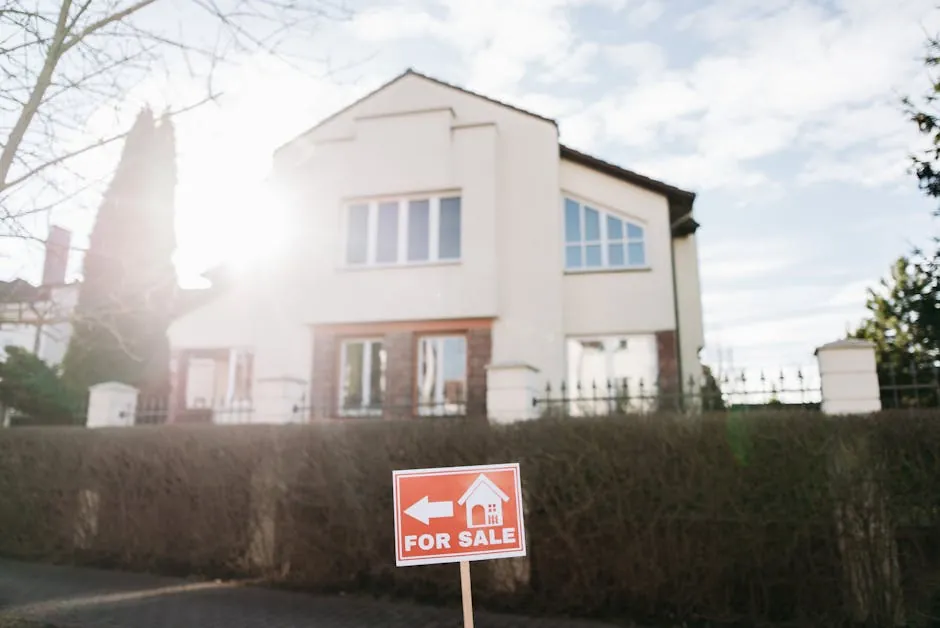
Australia quietly made one of its biggest foreign property policy changes in years. From 1 April 2025 to 31 March 2027, the federal government has banned foreign nationals from purchasing established residential properties. If you are on a temporary visa, hold overseas residency, or are a non-citizen investor, this change directly affects your options.
This guide cuts through the legal language and tells you exactly what the ban covers, who is exempt, what you can still legally buy — and how to structure your purchase to remain compliant.
What exactly is the foreign purchase ban?
The federal government announced a two-year moratorium preventing foreign persons (as defined under the Foreign Acquisitions and Takeovers Act 1975) from purchasing established dwellings — that is, any residential property that has already been built and occupied.
The ban runs from 1 April 2025 to 31 March 2027.
The stated goal is to reduce competition between investors and owner-occupiers in a housing market still stretched by low supply and high migration.
Who does "foreign person" actually mean?
Under Australian law, a foreign person includes non-citizens and non-permanent residents. Temporary visa holders, such as those on the 482, 500, or 600 visas, are classified as foreign persons, as are overseas investors with no Australian visa. Permanent Residents (PR), Australian citizens, and New Zealand citizens holding a special category visa are fully exempt. An Australian citizen's foreign spouse is also exempt if purchasing jointly.
Important: If you are a temporary visa holder who has recently received your PR, or whose PR visa was granted before 1 April 2025, the ban does not apply to you going forward.
What can foreign persons still buy?
The ban applies only to established (second-hand) residential property. The following remain open:
1. Brand-new dwellings (off-the-plan or newly completed)
New apartments, townhouses or houses that have not been previously occupied or sold as a residence are still purchasable. This includes:
- Off-the-plan apartments from developers
- House-and-land packages on vacant land
- Newly completed homes sold directly by a developer (first sale)
2. Vacant residential land
You can still purchase vacant land with the intention to build. However, FIRB will impose a condition requiring construction to commence within a specific timeframe (usually 4 years).
3. Commercial property
Hotels, serviced apartments, commercial offices, and industrial assets are not covered by the residential ban.
4. Developments with FIRB approval for foreign sales
Some large-scale residential developments hold New Dwellings Exemption Certificates, authorising the developer to sell units to foreign buyers without individual FIRB applications. Your agent or developer's legal team can confirm whether a project holds one.
What is FIRB and do you still need approval?
The Foreign Investment Review Board (FIRB) is the body that reviews and approves property purchases by foreign persons. Even though the ban blocks established home purchases, FIRB approval is still required for permitted purchases (new dwellings and vacant land).
FIRB fees in 2026 (residential)
The FIRB application fee is tiered based on property value. For a property valued up to $1,000,000, the fee is $14,100. If the value falls between $1,000,001 and $2,000,000, the fee rises to $28,200. For properties valued from $2,000,001 to $3,000,000, the fee is $56,400, and for any property over $3,000,000, the fee starts at $113,000 and increases from there.
Fees are non-refundable regardless of the outcome.
What does this mean for different visa types?
482 Temporary Skilled Shortage visa holders
You are classified as a foreign person. You cannot buy established homes but can purchase new builds or vacant land with FIRB approval. Once you obtain PR, the restriction lifts immediately.
500 Student visa holders
Same restriction applies. Most student visa holders have limited borrowing capacity anyway (60–70% LVR), and lenders accepting student visa buyers are scarce.
188 Business/Investor visa holders
You are a foreign person until PR is granted. However, many 188 pathway buyers are purchasing with the expectation of transitioning to 888 PR within the investment period — plan accordingly.
Overseas Chinese investors with no Australian visa
You are subject to the full ban on established properties, plus the Foreign Buyer Stamp Duty Surcharge (7–8% of purchase price in NSW/VIC). Your options are limited to new-build purchases via FIRB.
PR holders and citizens
No restrictions. You can buy any property, any type, with standard lending rules.
The Foreign Buyer Stamp Duty Surcharge still applies
Even for permitted purchases (new builds), foreign buyers in most states still pay an additional stamp duty surcharge. In NSW and VIC, the surcharge is 8%. In QLD, WA, and SA, it is 7%. TAS applies a 3% surcharge, while the ACT and NT currently have no surcharge.
This is on top of standard stamp duty. For a $800,000 new apartment in Sydney, a foreign buyer pays approximately $64,000 in surcharge alone.
Will the ban be extended beyond March 2027?
The government has not signalled permanent extension, but has left the door open pending housing supply data. If construction completions remain below target, a further extension is plausible. Buyers planning on purchasing established property should factor this timeline into their residency pathway planning.
Common questions
Can I buy in my Australian spouse's name only? If your Australian citizen or PR spouse purchases solely in their name, that is their right and not subject to foreign person rules. However, lenders and conveyancers will scrutinise any arrangement where a foreign person appears to be the beneficial owner while a citizen holds legal title. Get proper legal advice.
Does the ban affect my ability to get a home loan? The ban affects what you can buy, not your eligibility to borrow per se. Most lenders who accept foreign-income borrowers restrict lending to new properties anyway — this brings policy into alignment with what most lenders were already doing.
I already own an established property — can I buy another? The ban applies to new purchases. Existing ownership is unaffected.
Next steps
If you are on a temporary visa or overseas residency and want to buy property in Australia, your realistic options are:
- New builds or off-the-plan — budget for FIRB fees and foreign stamp duty surcharge
- Accelerate your PR pathway — the single most effective way to unlock the full market
- Get pre-approved before applying for FIRB — lenders assess your income and visa status independently of FIRB
Our team at Arrivau works with buyers across all visa types and can assess your eligibility, calculate your all-in purchase costs (FIRB + stamp duty + foreign surcharge), and identify which lenders will consider your application.
Last updated: May 2026. Policy based on the Foreign Acquisitions and Takeovers Act 1975 and Treasury guidance as at 1 April 2025. Individual circumstances vary — seek independent legal and financial advice before purchasing.
Want the numbers run for your situation?
Get a free, no-obligation assessment from Arrivau's licensed team — loan, property or migration.
Start a free assessment →